
How to Spend Less Time on Your Phone Without Giving It Up
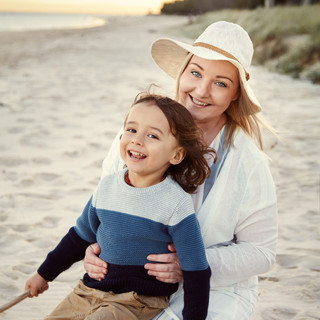

There are times when I pick up my phone for a perfectly good reason and find myself doing something entirely different a few minutes later. I might have wanted to check the weather before taking the dog for a walk, but a message has arrived, and while answering it I remember something I meant to look up. Before long, I have wandered through several unrelated things, and when I finally put the phone down, I realise I still haven't checked whether it's going to rain. I find this rather amusing, although there is something unsettling about how easily a small, ordinary intention can disappear.
I have no particular desire to give up my phone altogether. There are things it allows me to do that I genuinely appreciate, and some have enriched our family life in ways I would never have imagined when mobile phones first became commonplace. When I am out walking our dog, for instance, I love being able to identify unfamiliar plants growing along the way. My son and I have learned about wild plants in our area, including some of the native bush foods that grow around us, simply because we became curious about something we had passed on a walk. Having the means to begin finding an answer while standing beside the plant itself has encouraged us to look more closely at our surroundings. We still need to verify what we discover, particularly where edible plants are concerned, but the phone has become a useful starting point for learning about the natural world.
I think this is technology at its best. A question arises from something we have encountered in the real world, and the device helps us understand it. We can put it away afterwards and continue walking, perhaps noticing a plant of the same species further along the track. The difficulty begins when the phone remains in our hands long after it has served its purpose. It is remarkably easy to move from identifying a flower to reading something entirely unrelated, and I have begun to notice how often the device that helps me engage with the world can also draw my attention away from it.
This has made me think about the extraordinary number of things we have allowed our phones to replace. Over the course of a relatively short period in human history, the camera, the road atlas, the alarm clock and much of our personal correspondence have found their way into a single object. The convenience is undeniable, but I wonder whether we have given much thought to what happens when almost every ordinary activity begins with reaching for the same screen.
When Everything Became Part of the Phone
We have travelled quite extensively as a family, often in our caravan, and I cannot imagine how many wrong turns we might have taken without the help of digital maps. There is something enormously reassuring about knowing that we can find our way through an unfamiliar town, locate somewhere to stop for the night or discover that a road ahead has been closed before we reach it. When travelling with a caravan, knowing the most practical route can make a considerable difference to the day, and I have no intention of pretending that a paper map can provide live traffic information or warn us about an unexpected roadblock.
Still, I recently bought a paper road map because I wanted to become accustomed to using one again. I like the idea of opening it across a table and looking at the country as a whole, following the roads with my finger and understanding where one place sits in relation to another. A digital map is very good at telling us where to turn next, but I often feel that I arrive somewhere without having developed much understanding of the country we have passed through. With a paper map, I find myself looking at the distance between towns and noticing places that lie beyond our intended route. It gives me a broader sense of where we are, and I would like my son to grow up knowing how to read one.
I suspect we will continue using both. There are days when the efficiency of a phone is exactly what we need, particularly when we have a long distance to travel and would rather avoid spending an extra hour on the road. At other times, I would like us to have the pleasure of planning a journey without being guided through every turn. I think there is something worth preserving in the older skill of finding our own way, even when a more convenient alternative exists.
I have begun making similar changes at home. I recently bought a clock for our wall because I was tired of picking up my phone whenever I wanted to know the time. It seemed such a small thing, but I realised that checking the hour had become another opportunity for something else to interrupt me. A clock does its one job beautifully, and once I have looked at it, there is nothing further asking for my attention.
I would also love to find a little wind-up alarm clock, the sort that ticks quietly beside the bed. I imagine there would be something rather comforting about falling asleep to that familiar mechanical sound, knowing that generations of people before me would have heard something similar in their bedrooms. Perhaps I am romanticising it slightly, and the ticking would eventually drive me mad, but I would like to find out. There is something appealing about an object that has a single purpose and can be relied upon to perform it without requiring anything more from us.
The more I think about these ordinary objects, the more I realise that I miss having certain parts of life remain separate. A clock once told us the time, and that was the end of the interaction. A road map could occupy us for an afternoon without offering a hundred other places to go. I appreciate the efficiency of having everything together, but I am beginning to appreciate the freedom of allowing some things to stand alone again.

The Photographs We Keep
I have always loved taking photographs, particularly when we are travelling or spending time somewhere beautiful. There is a natural desire to preserve the places we visit and the little moments that become part of our family history. When my son was younger, I wanted to remember so much of his childhood, and I still find enormous pleasure in looking back through photographs and discovering something I had forgotten.
But I have also begun taking fewer photographs when we are out together. I noticed that there were times when I was so occupied with capturing a moment that I was experiencing it primarily through the screen in front of me. I might take several photographs of the same view, hoping to get one that looked exactly as I remembered it, when I could simply have stood there and enjoyed what was happening. These days I am more inclined to take a photograph or two and then put the phone away. Sometimes I don't take one at all, and I am becoming quite comfortable with the idea that certain moments will exist only in our memories.
My partner has a DSLR camera, and he has started bringing it along when we go somewhere special. I rather like this arrangement because taking photographs becomes something we have chosen to do that day. The camera comes out when there is something we want to remember, and afterwards it can be put away. I also love the quality of the photographs and the thought that they might one day be printed and kept for years to come.
I have been creating photo albums and books from our family travels, and this has changed the way I think about the photographs we take. There is something lovely about having a physical record of the places we have visited, something that can sit on a shelf and be brought out when family or friends come over. I imagine offering someone a cup of tea and sitting beside them while they turn the pages, watching them smile at a photograph or ask a question about somewhere we have been. We can tell them the story behind it, remember something that happened that day and enjoy the pleasure of sharing the experience together.
I find this much more meaningful than uploading photographs for people to scroll past. A photograph in an album has a different kind of life. It can be revisited years later, passed around a table and eventually handed down to someone who may never have known the people or places pictured within it. I love the thought of my son having these books when he is older, perhaps showing them to his own children and remembering the places we went together. There is a continuity in keeping family photographs this way that appeals to me enormously, particularly in a time when so much of our personal history is stored on devices and accounts that may not exist forever.
The People We Actually Want to Hear From
I quit social media years ago, and I have felt much better for it. I occasionally think about how strange it became to know so much about the daily lives of people with whom I had very little personal contact. We could see where someone had been on holiday, what they had eaten for dinner or how they were spending their weekend, yet months or even years might pass without us having an actual conversation. There was a curious sense of familiarity that developed through seeing these fragments of people's lives, although I am no longer convinced that familiarity amounted to knowing them particularly well.
I don't think there is anything wrong with enjoying photographs or updates from people we care about. What troubled me was the sheer amount of information I was allowing into my days, much of it concerning people I would probably never speak to personally. There is only so much attention we have available, and I began to wonder why I was spending so much of mine following the lives of people who were essentially strangers, while the people closest to me deserved far more of it.
I still love sending text messages. There is something wonderful about being able to write a few words to someone you care about and know that they will receive them almost immediately. It is particularly useful when family and friends live far away, and I appreciate being able to maintain those connections throughout the ordinary course of a day.
Sometimes a message is all that is needed, and at other times I would much rather pick up the phone and hear someone's voice.
I have also returned to sending letters and postcards every now and then. There is a particular pleasure in choosing a card, sitting down to write something personal and imagining it travelling through the postal system before arriving in someone's letterbox. I have noticed how delighted people are to receive something handwritten. It seems to carry a different sort of attention, perhaps because the person receiving it knows that someone has taken time out of their day to write specifically to them. A postcard may contain very little news, but it has a way of making someone feel remembered.
Have we have confused being connected with being continually informed? We can know what hundreds of people are doing without having spoken meaningfully to any of them. I would rather know less about the lives of people I barely see and make more time for those with whom I share a genuine relationship. A phone can be a wonderful way of maintaining those relationships, particularly when we use it for the simple purpose of getting in touch.
The Habit of Being Available
One of the changes I have made that has brought me the greatest sense of relief is removing email from my phone. I still use email regularly, of course, and much of my work depends upon it. But I prefer to open my laptop at a particular time of day, give my correspondence the attention it requires and then close it when I am finished. There is something satisfying about allowing work to occupy its own part of the day, rather than having it accompany me everywhere I go.
I have become increasingly uncomfortable with the expectation that we should be available whenever someone wishes to contact us. The fact that a message can reach us immediately seems to have created an assumption that we ought to receive it immediately, and perhaps respond almost as quickly. Yet I cannot think of many ordinary circumstances in which someone genuinely needs access to my attention at every hour of the day. There are emergencies, of course, and people close to us whom we want to be able to reach us. But most emails can wait until tomorrow, and most questions do not become urgent simply because someone has thought to ask them.
I want to be able to check the weather without discovering that someone has sent me work to do. I want to take our dog for a walk without feeling that I ought to respond to an email because I happened to see it arrive. I want the time I spend with my family to belong to us, without the possibility of every other obligation entering the room whenever a screen lights up.
There is some research that helps explain why these interruptions can feel so wearing. In a 2024 study published in Acta Paediatrica, researchers followed 62 parents of young children and found that they picked up their phones an average of 93 times a day. More interestingly, phone pickups prompted by notifications were associated with greater daily parenting stress, although the study could not establish that the notifications themselves caused the stress.
I find that distinction worth considering. It may be less important how long we spend using our phones than how often they interrupt something else. An hour spent talking to a loved one is a very different experience from an afternoon in which our attention is repeatedly drawn away from whatever we are doing. The number of minutes may tell us something about our habits, but it cannot tell us whether those minutes were well spent.
An Older Way of Doing Things
There is a growing interest in returning to more analogue ways of living, and I find this encouraging. Research from MIDiA found that two-thirds of consumers surveyed in the first quarter of 2024 had tried to reduce their screen time, with some turning towards physical media and in-person activities. I suspect this reflects a feeling many of us recognise: a desire to recover parts of life that have gradually become absorbed into our devices.
Yet I also understand why people find it difficult to reduce their dependence upon phones. So much of modern life now expects us to have one. We need authentication codes to access accounts, banking services encourage us towards mobile applications, and even paying for something in a shop can involve reaching for a screen. There are times when it feels as though choosing to live with less technology requires far more effort than simply accepting it.
Still, many of the older alternatives remain available, and I find myself increasingly drawn towards them. I can withdraw cash from an ATM and use it to pay for everyday purchases. I can visit a bank branch when I need to, provided there is one accessible. I can read a real book, use a paper map and send a letter through the post. None of these things requires me to abandon modern technology, and I rather like having the choice.
I have also begun thinking about how much of what is on my phone I genuinely need. There are applications I have no reason to keep, notifications that serve no useful purpose and conveniences that I could quite happily do without. I wonder whether the answer for many of us is simply to make our smartphones a little less clever. We could remove the things that encourage us to spend time there unnecessarily and keep the functions that make our lives easier. A phone that allows us to make calls, send messages, find our way when travelling and access essential services would still be an extraordinary piece of technology.
There is a temptation to turn this into another project, something that requires measuring screen time and continually assessing whether we are doing well enough. I have little interest in that. I don't want to spend my days worrying about how many minutes I have spent on a device, particularly when some of those minutes may have been useful or enjoyable. I would much rather make a few thoughtful changes to the way I live and allow them to become ordinary habits.
Perhaps that is what appeals to me most about returning to analogue objects. Once a clock is hanging on the wall, I no longer need to make a conscious effort to avoid checking the time on my phone. When a book is beside my bed, reading it becomes the natural thing to do. When the photographs from our travels have been printed and arranged in an album, they are there for us to enjoy without having to open a screen. These are small changes, but they allow certain parts of life to become separate from the digital world again.

How to Spend Less Time on Your Phone whilst Making Room for the World Around Us
I wonder what we will make of this period in our lives when we look back on it in another twenty or thirty years. We have become accustomed to carrying an extraordinary amount of the world around with us, and I suspect we are still discovering what that means for the way we experience our own lives. There is something remarkable about being able to reach almost anyone, find almost anything and satisfy our curiosity within seconds. Yet I find myself increasingly drawn towards the parts of life that ask a little more of us, where an experience is allowed to unfold without being interrupted or immediately shared.
I think this is partly what I have been searching for in returning to older, more analogue ways of doing things. There is a different kind of satisfaction in completing something without the assistance of a screen, particularly when it requires a little patience or attention. I have begun to appreciate that convenience, while often wonderful, is not always the most rewarding part of an experience. Often the small amount of effort involved is precisely what makes something memorable. We become familiar with a place by finding our way through it, with a person by spending time in their company, and with a skill by practising it long enough for it to become our own.
I am also conscious that my son is growing up in a world very different from the one I knew as a child. Technology will undoubtedly play a significant part in his life, and I hope he learns to use it with curiosity and confidence. But I would also like him to know that he has a choice in how much of his life he gives to it. I want him to feel comfortable with quiet afternoons that have no particular purpose, to find pleasure in doing things with his hands and to understand that being unavailable for a little while is a perfectly ordinary part of being human. These are things I am still learning myself, and perhaps that is why they matter to me.
I don't imagine there will ever be a point when I have established the perfect relationship with my phone. Our circumstances will continue to change, and there will always be occasions when technology makes life considerably easier. I am grateful for that. But I am becoming more comfortable with deciding that certain things can wait, that some conveniences are unnecessary and that I don't have to participate in every new way of doing something simply because it has become available.
Perhaps, in time, reaching for my phone will become something I do a little more deliberately, when there is a reason to use it and something worthwhile to be gained. The rest of the time, I hope it can remain where I left it, while I get on with the ordinary business of living.
There is still something lovely about finding a story in the letterbox.

If you want to spend less time on your phone, The Letterbox at the Cottage is home to The Print Circle bringing dòigh beatha to your door each month, together with a collectable art postcard, a personal letter from Julie Ann and access to the weekly audio stories of The Listening Room.


Comments